There is a distinct difference between a manicure that looks like plastic sitting atop the nail plate and one that mimics the seamless architecture of a sculpted gel extension. That difference is rarely the design or the brand—it is the fit. When we talk about achieving a luxury aesthetic at home, finding the correct press on nail size is the single most critical factor in elevating your hands from “DIY” to “high-end salon.”
This tailored look suits everyone, but it is particularly transformative for those with flat nail beds or petite hands who often struggle with standard drug-store kits. By prioritizing precise measurement and sidewall alignment, we achieve a result that looks intentional, expensive, and effortlessly minimal. It is the choice for the modern professional who demands the durability of gel without the bi-weekly salon appointment.
What the Tailored Fit Looks Like in Real Life
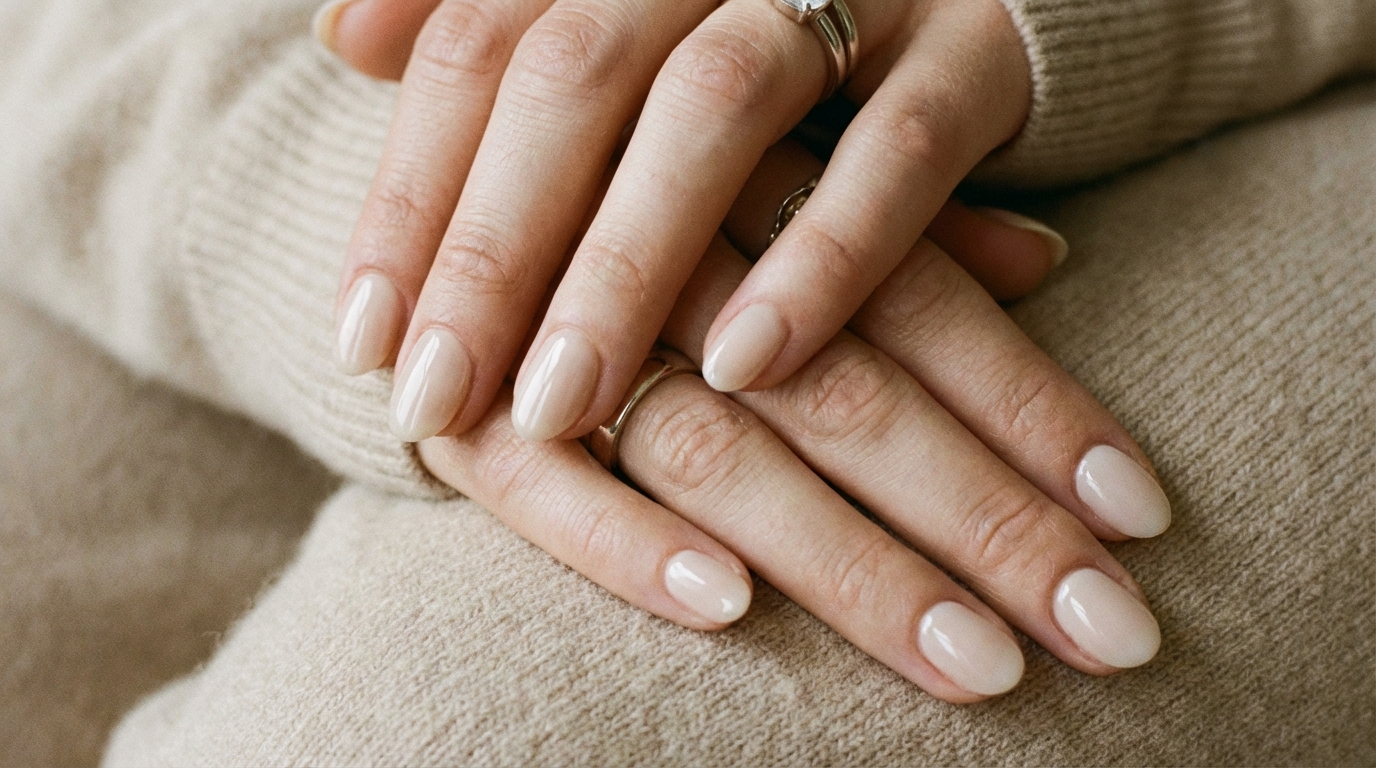
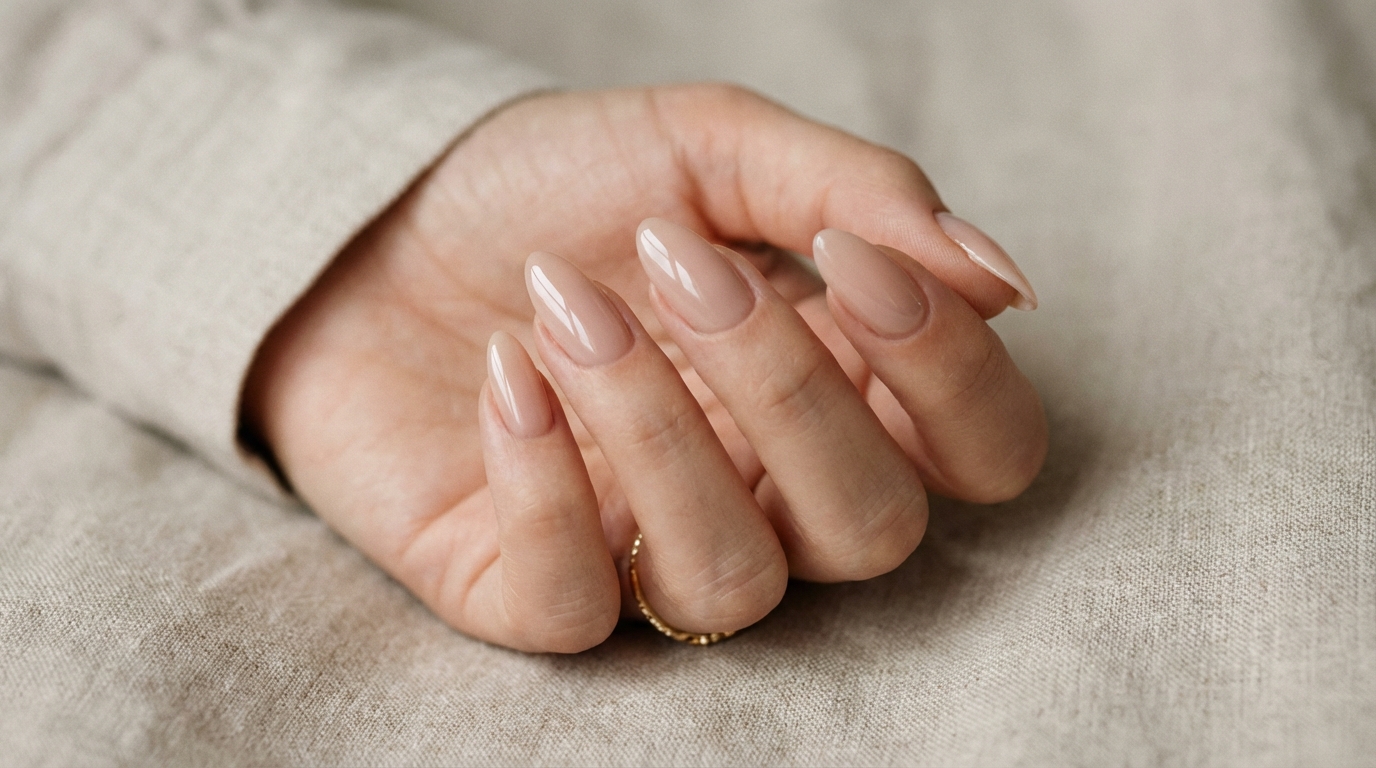
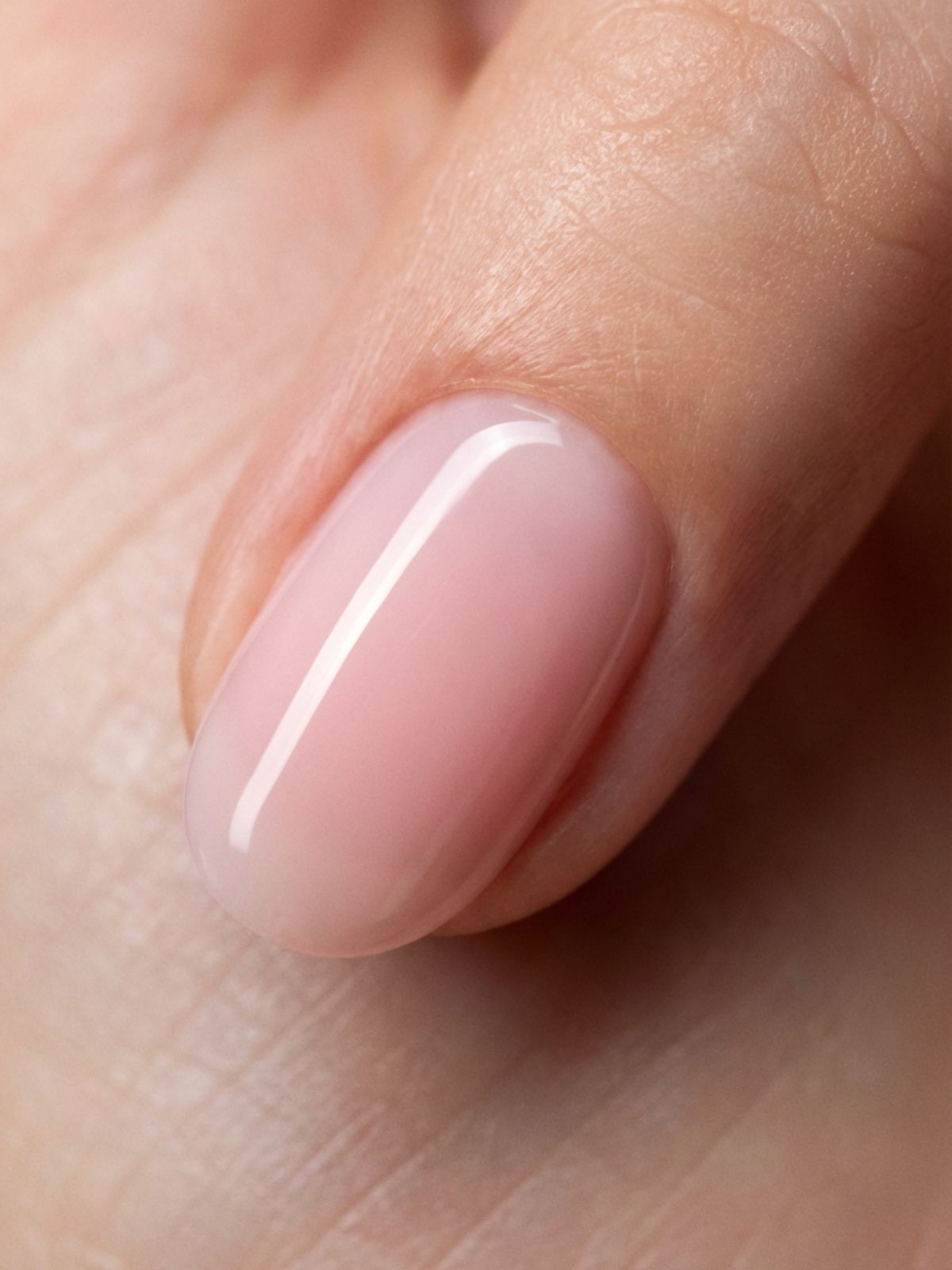
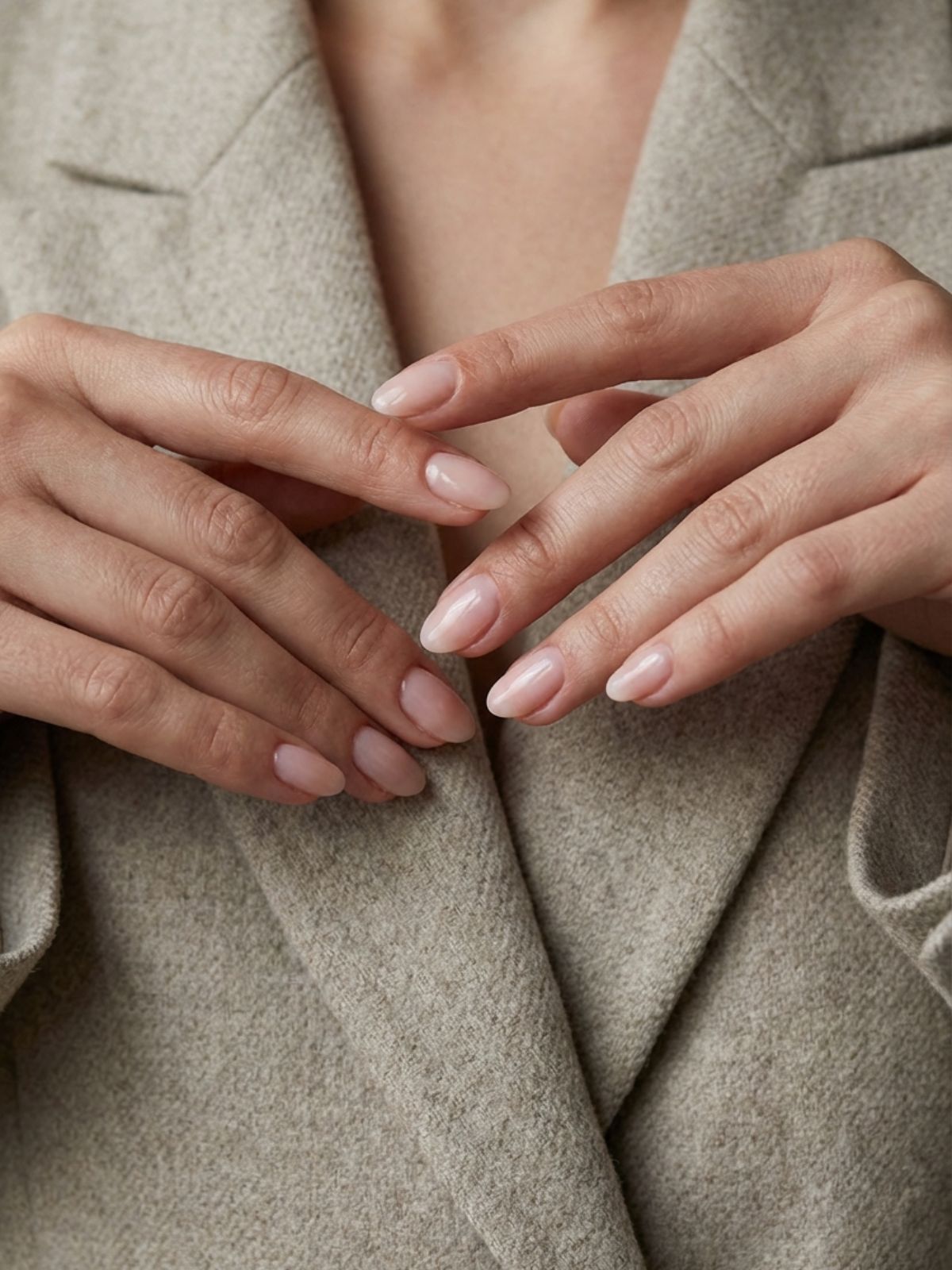
When sized correctly, a press-on nail should be indistinguishable from a soft-gel extension or a structured manicure. Visually, the cuticle line appears blurred and flush against the proximal nail fold, rather than creating a bulky “step” or ridge. The sidewalls of the artificial tip align perfectly with your natural lateral folds, ensuring no natural nail peeks out from the sides, nor does the plastic dig into the skin.
The finish relies heavily on this fit. A well-sized nail allows for a lower apex and a smoother transition from the cuticle to the free edge. Whether you opt for a milky sheer nude or a deep opaque bordeaux, the light reflection—the “line of light” we look for in professional manicures—should run unbroken from base to tip. This seamlessness is what separates a quick fix from a sophisticated beauty staple.
Nail Style Profile: The Tailored Fit
| Feature | Description |
|---|---|
| Color Family | Universal (Dependent on fit, not hue) |
| Opacity | Opaque base recommended to hide air bubbles |
| Finish | High-gloss or velvet matte (Gel-like texture) |
| Ideal Nail Length | Short to Medium (Active or Sport length) |
| Ideal Nail Shape | Squoval or Soft Almond (Follows natural cuticle line) |
| Natural Appearance | Very Natural (If sized < 1mm tolerance) |
| Best For | Minimalists, Office Professionals, Photography |
Why “Press On Nail Size” is So Popular for Everyday Nails
The conversation around instant manicures has shifted. We are no longer discussing them as a temporary emergency solution, but as a viable alternative to acrylics. The surge in interest regarding press on nail size stems from a desire for realism. Clients are realizing that durability is not just about glue strength; it is about physics. A nail that fits perfectly—sidewall to sidewall—creates a vacuum-like seal that prevents water ingress and lifting.
Furthermore, a proper fit protects the health of the natural nail. Oversized tips can cause trauma to the surrounding skin, while undersized tips can pop off under pressure, taking layers of natural keratin with them. The “Tailored Fit” style is popular because it respects the integrity of the natural hand while delivering that polished, clean aesthetic we all crave.
How to Get This Nail Look
At a Nail Salon
If you prefer a professional to handle the architecture of your nails, you are looking for “Soft Gel Extensions” or “Gel-X.” This service uses full-coverage tips made of gel, cured onto your natural nail.
- Ask for: A structured gel manicure or full-cover soft gel extensions.
- Show photos of: Clean cuticle work and flush transitions. Avoid photos of thick acrylics.
- What to avoid: Technicians who stick tips on without measuring properly or who don’t file the cuticle area of the tip before application.
At Home
Achieving this at home requires patience during the selection process. Press-ons offer the most control over the final look because you can file them before they even touch your hand. For the most believable finish, salon-look press-ons are superior to standard plastic tips because they are often thinner at the cuticle and thicker at the free edge, mimicking a natural nail structure.
Step-by-Step Application for the Most Natural Result
The secret to a seamless application lies in the preparation and the modification of the tip itself. We treat the press-on as a raw material that needs to be customized.
1. The Measure (The Crucial Step)
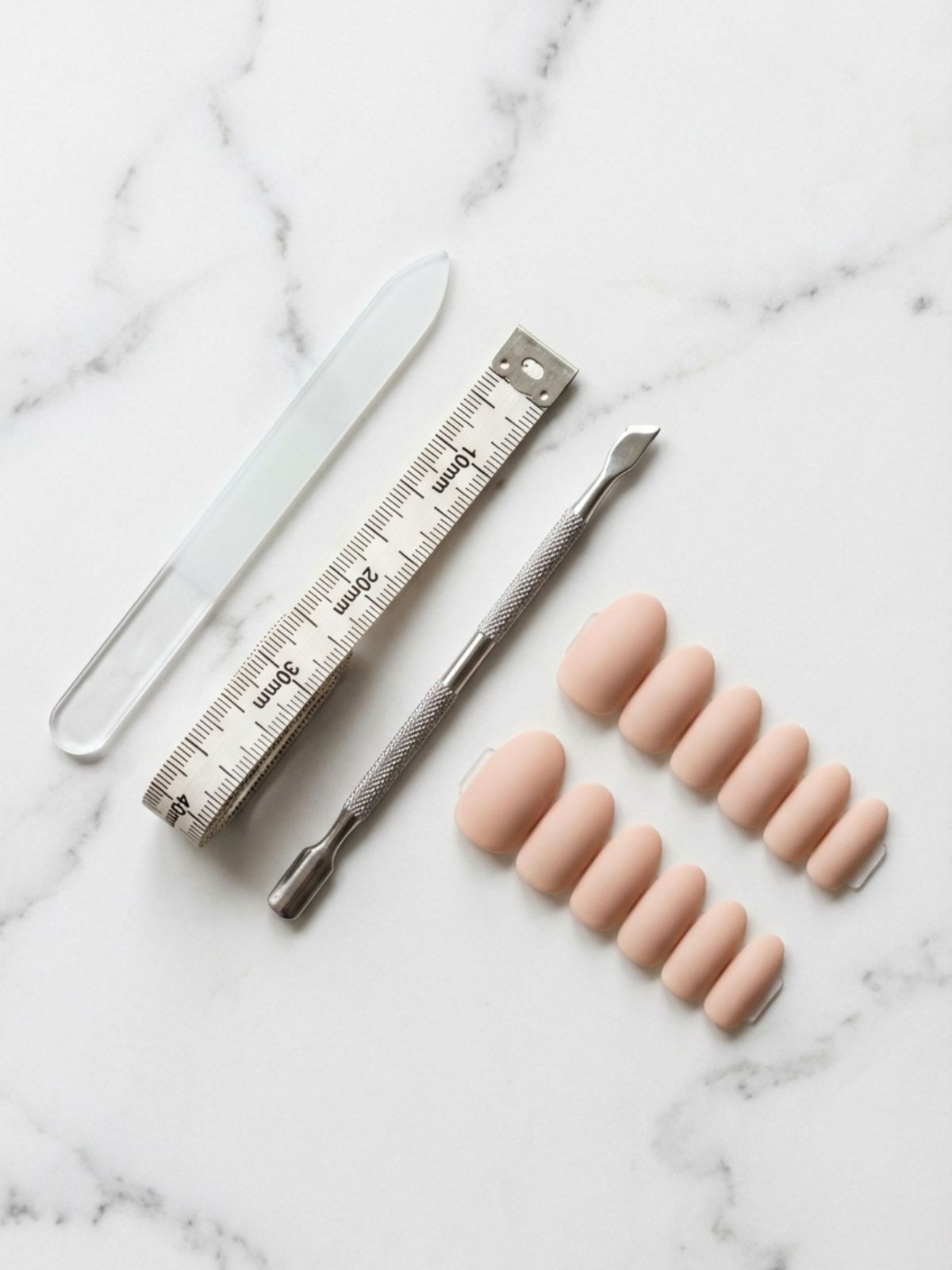
Do not simply eyeball the size. Measure your nail bed at its widest point using the millimeter side of a soft tape measure. If you fall between sizes, always choose the larger size. It is infinitely easier to file down a slightly large tip than to stretch a small one (which causes white stress lines in the plastic and early popping).
2. The Customization
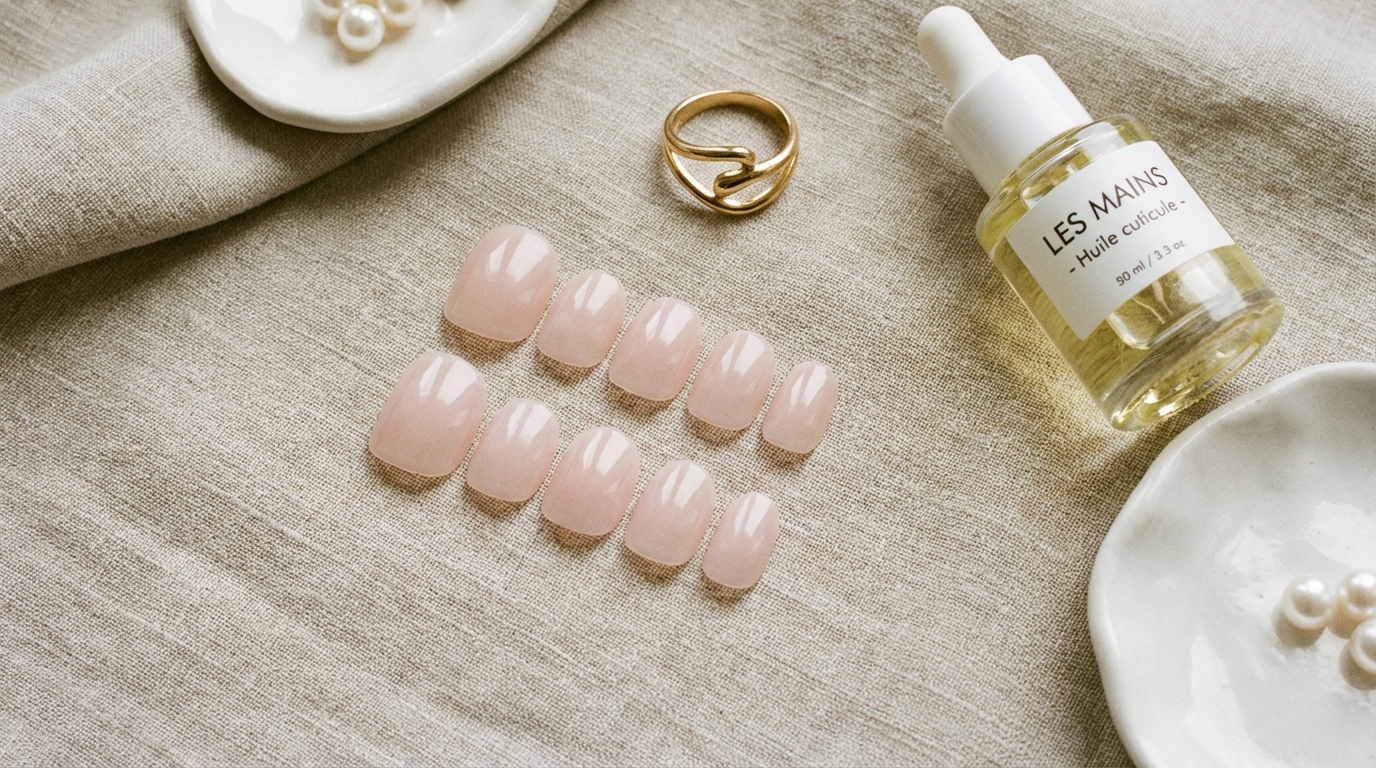
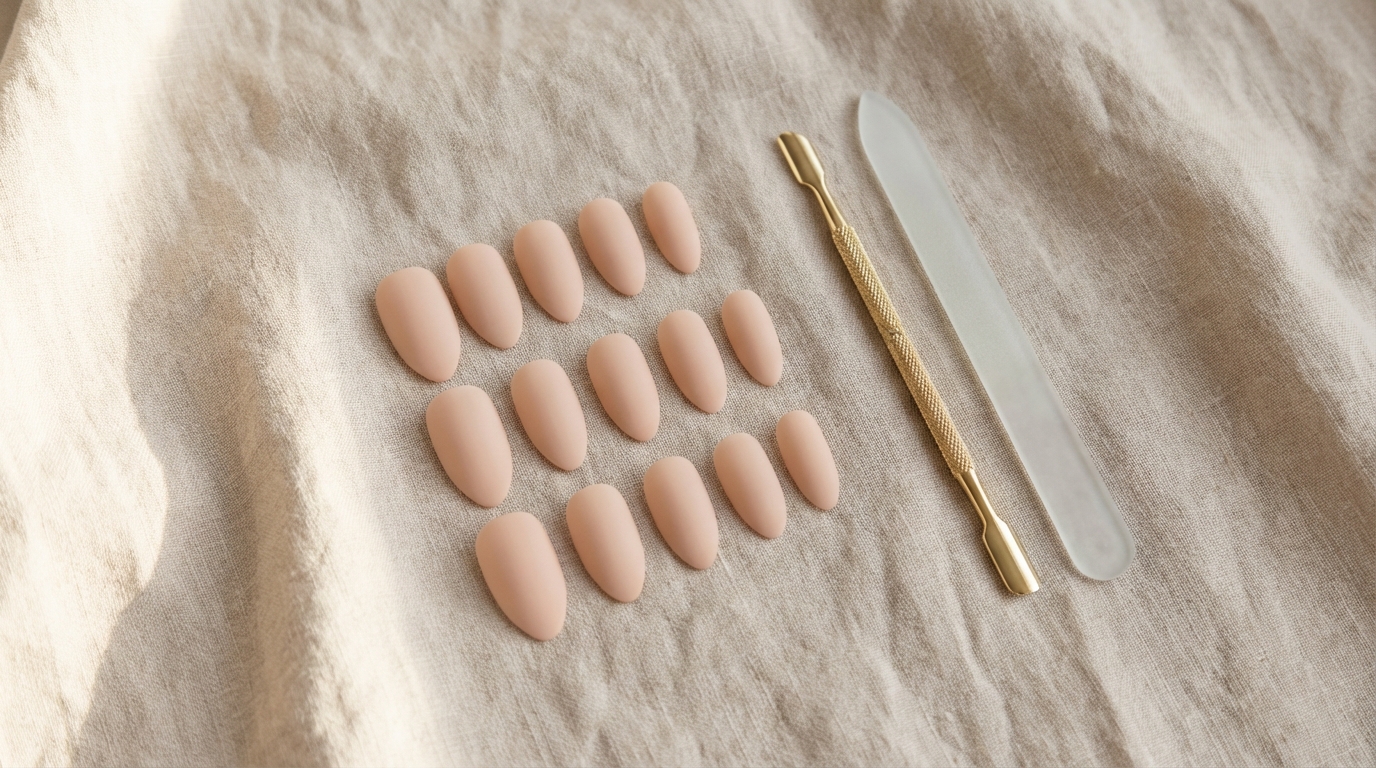
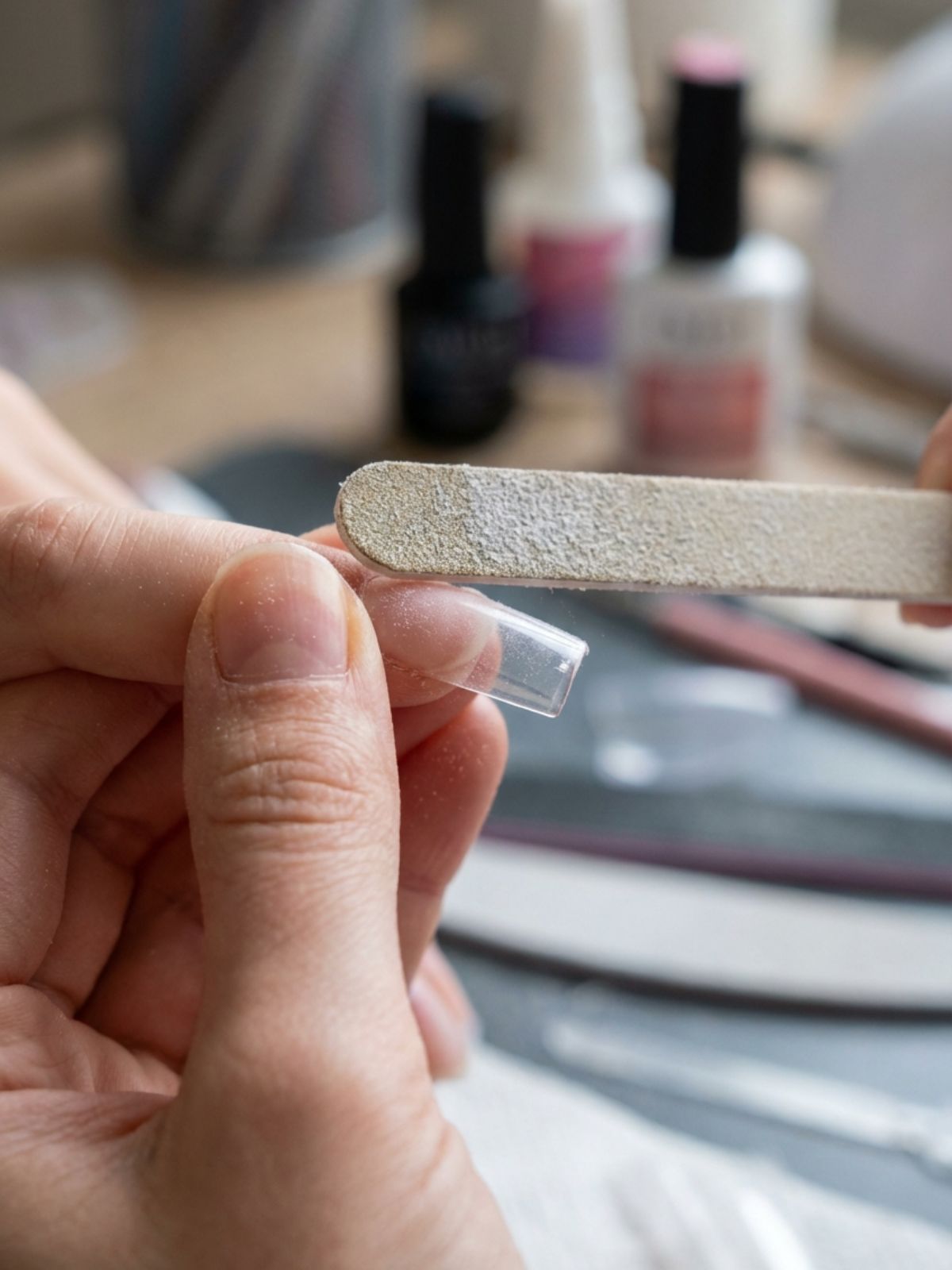
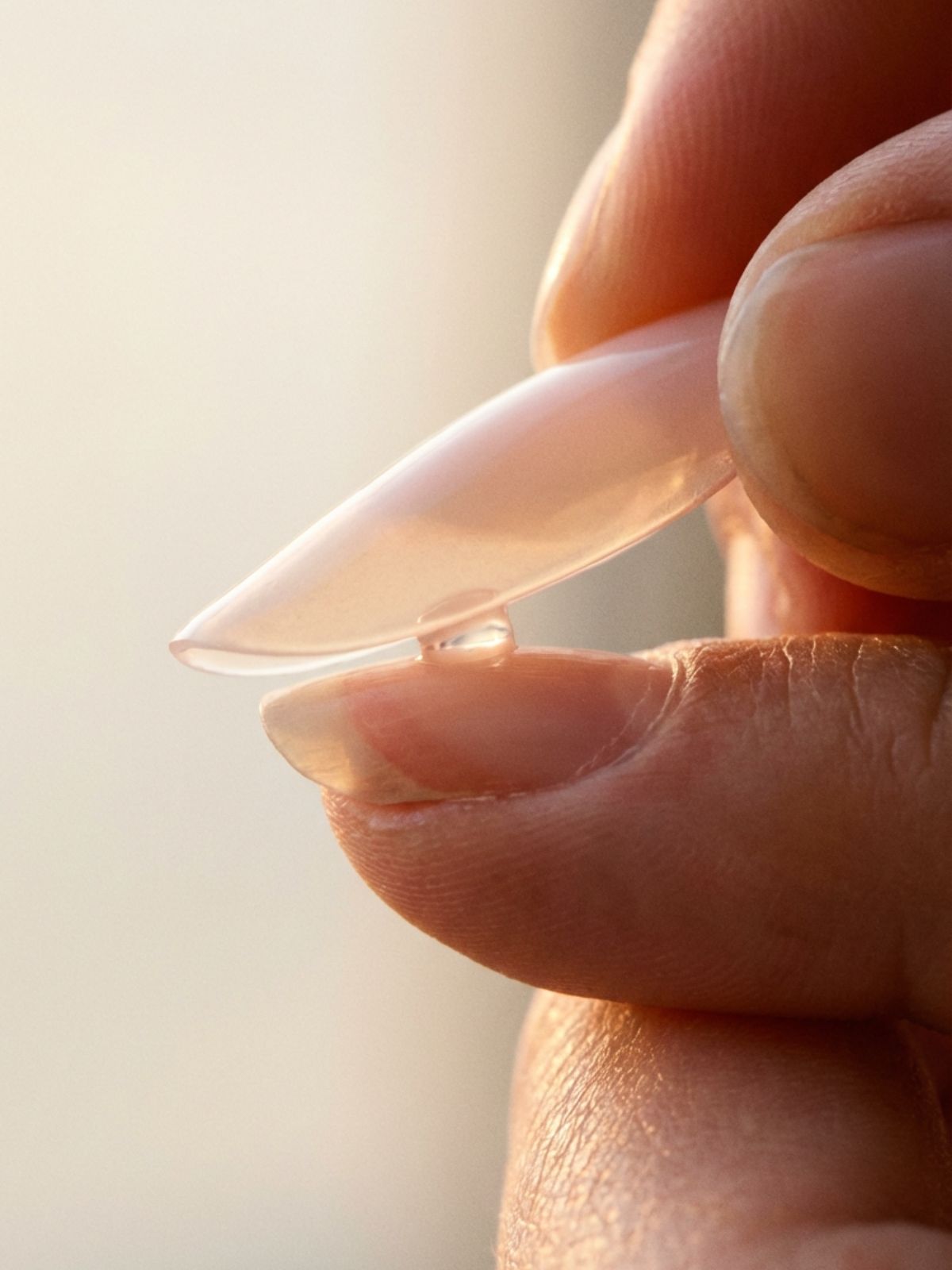
Once you have selected your tips, take a 180-grit file and gently taper the sides of the press-on to mirror the exact curve of your cuticle. Most mass-produced tips are too square at the base. Rounding them slightly ensures they sit deeply into the proximal fold.
Pro Tip: Lightly buff the underside of the press-on tip where it will contact your nail. This removes the manufacturing shine and creates a rough texture for the glue to grip, doubling your wear time.
3. The Prep
Push back your cuticles gently. We want to expose the entire nail plate to ensure the press-on sits as close to the skin as possible without touching it. Cleanse the nail thoroughly with 70% alcohol or a dehydrator to remove all oils. Any residual oil is the enemy of adhesion.
4. The Application
Apply glue to both your natural nail and the back of the tip. When placing the nail, come in at a 45-degree angle, sliding the tip down until it meets the cuticle line, then press down slowly to the free edge. This technique pushes air bubbles out rather than trapping them.
For those new to this process, reading a guide on press-on nails for first-time users can help build confidence in your technique.
Common Mistakes That Make Nails Look Fake or Bulky
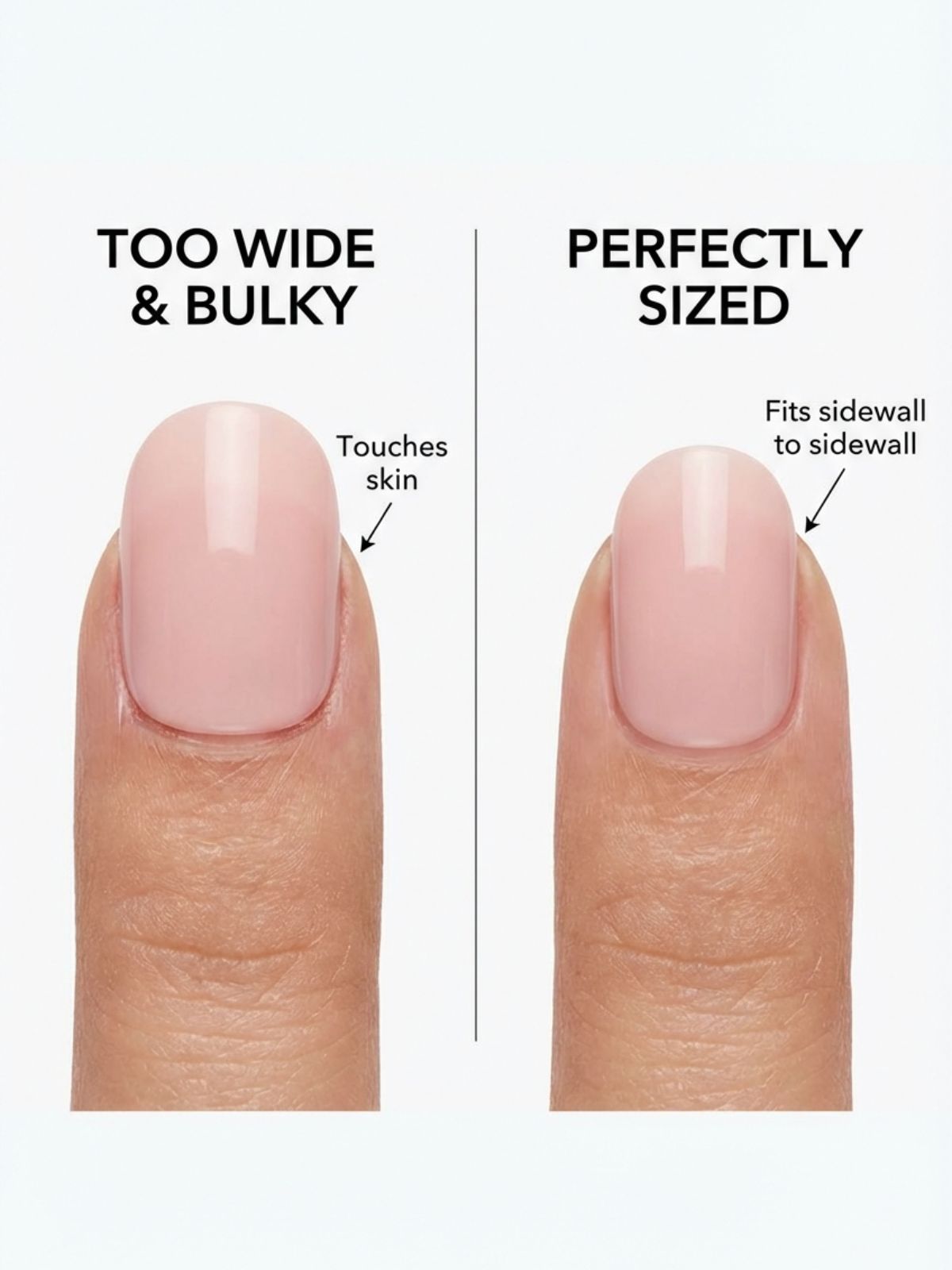
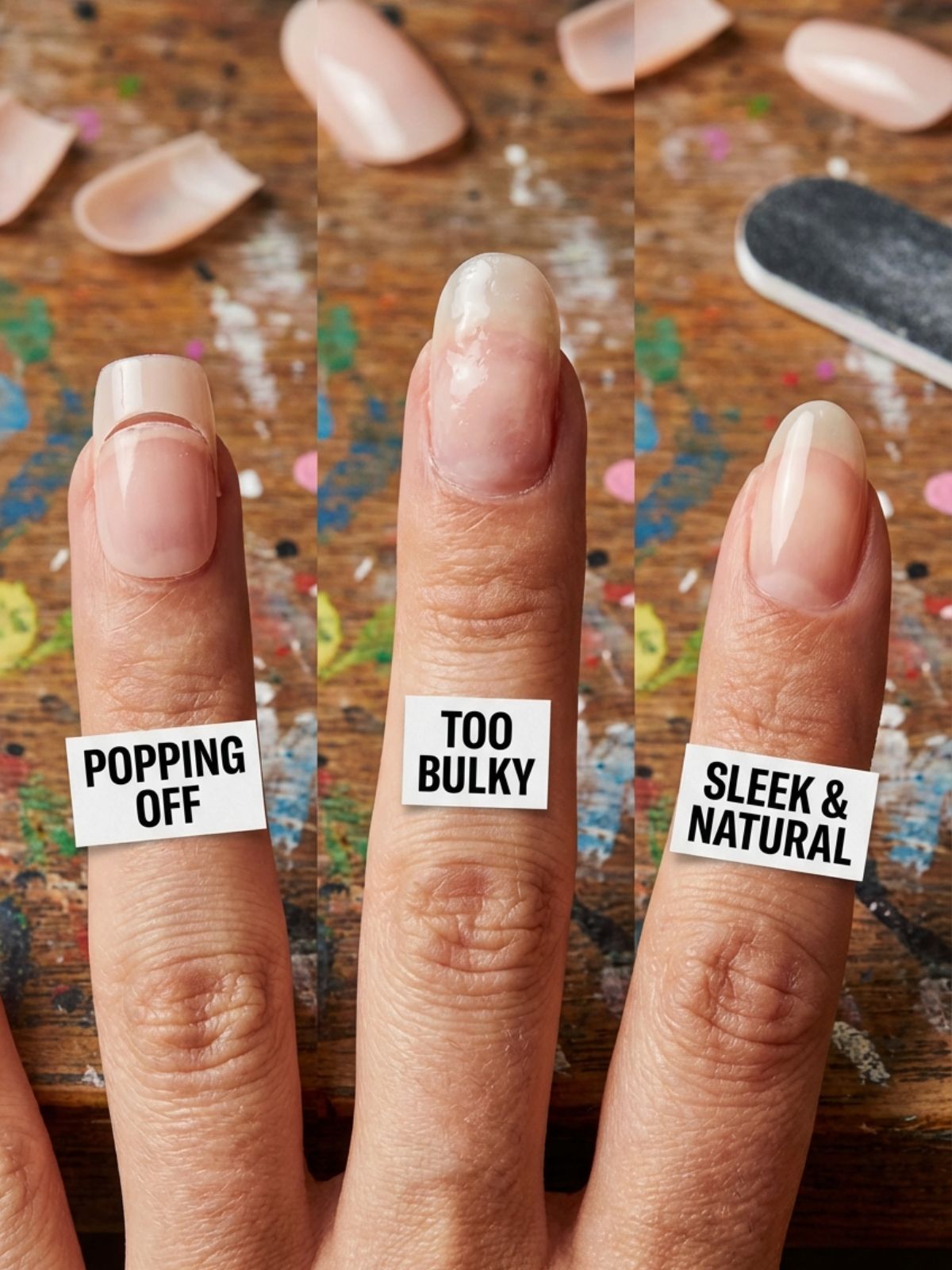
Even high-quality nails can look artificial if the sizing mechanics are off. The most frequent error I see is choosing a size that is too wide. When a tip overhangs the sidewall, it catches on hair and clothing, leading to lifting. Visually, it makes the fingers look wider and shorter.
Conversely, a tip that is too narrow exposes the natural nail underneath. This breaks the illusion immediately. If you have flat nail beds, standard curved tips may pop off because they don’t make full contact. In this case, press-on nails for short nail beds or flatter profiles are essential to prevent that “hovering” look.
Another subtle mistake is ignoring the cuticle gap. If the press-on is applied too far from the cuticle, it looks like a two-week-old manicure immediately. Aim for a gap of no more than 0.5mm—just enough to avoid skin contact, but close enough to look seamless.
Maintenance and Longevity
A well-sized set should last 10 to 14 days. To maintain the high-gloss, glass-like finish, avoid using your nails as tools—no opening soda cans. Water is the primary solvent that breaks down adhesive bonds over time.
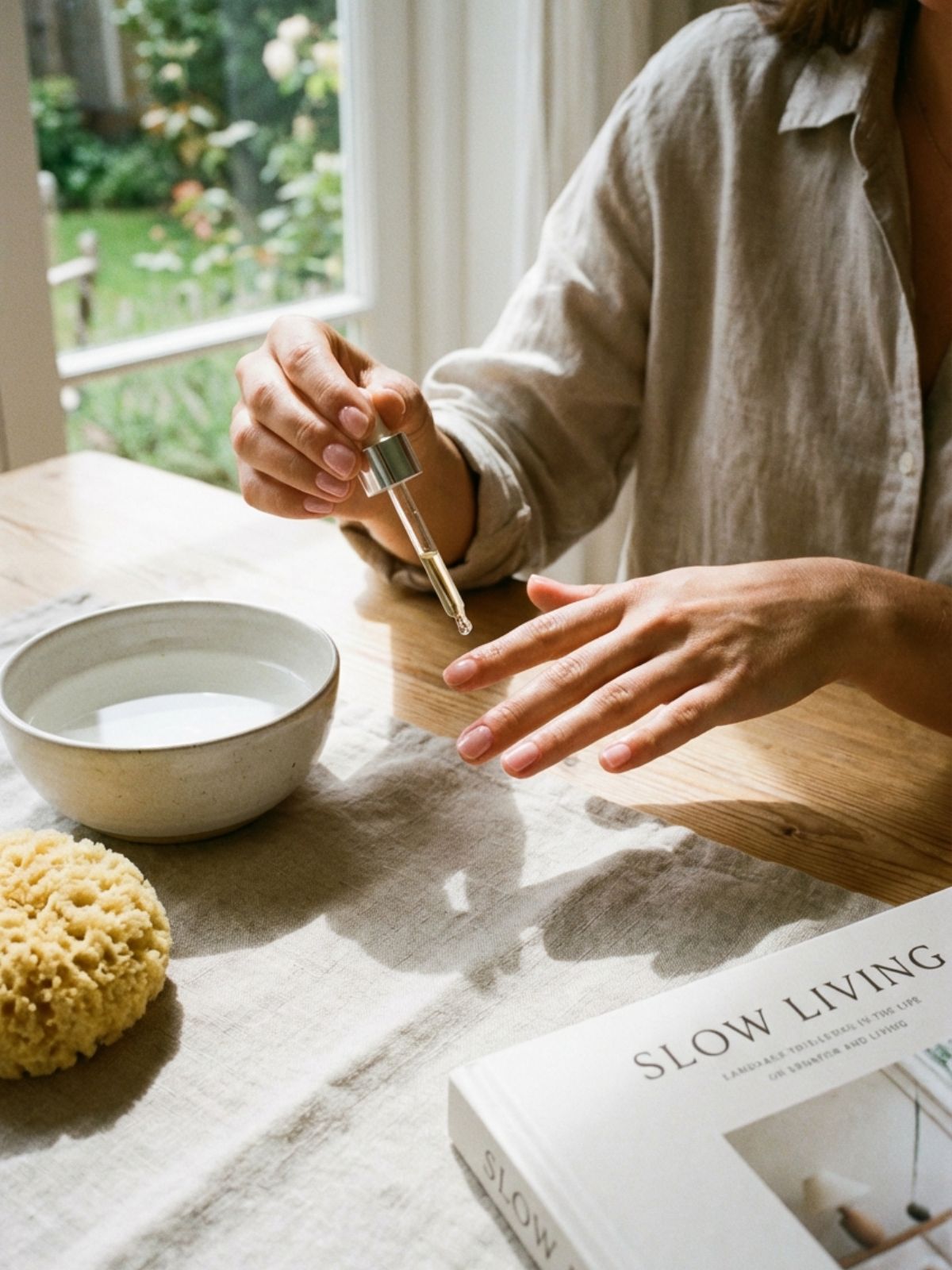
Pro Tip: Carry a small bottle of cuticle oil and apply it twice daily. While oil breaks down glue if used excessively during removal, a light daily application keeps the plastic flexible and prevents the hardened glue from becoming brittle and snapping under pressure.
FAQ
How do I know if the press on nail size is correct?
The nail should cover your natural nail from sidewall to sidewall without you having to press it flat to make it fit. If you feel pressure or pinching when the nail is resting naturally, it is too small. If it touches the skin on the sides, it is too big.
Will wearing press-ons damage my natural nails?
Damage usually occurs during removal, not wear. Never pry them off. Proper sizing actually prevents damage because the nail doesn’t lift and snag, which can tear the natural nail layers. According to experts at Allure, patience during the soaking removal process is key to maintaining nail health.
Can I file press-on nails to change the shape?
Absolutely. In fact, I recommend it. Filing the tip allows you to customize the length and shape to suit your hand. However, always file in one direction to prevent fraying the plastic or gel tip.
Which glue is best for a natural look?
Brush-on glue tends to offer a more even, bubble-free application compared to squeeze tubes. This prevents those unsightly white air pockets that can be seen through sheer or translucent nail colors.
Conclusion
Mastering the art of the perfect fit is what graduates you from a casual user to a nail connoisseur. By paying attention to the nuances of sizing, tapering, and placement, you can achieve a manicure that rivals any high-end salon service. It requires a moment more of patience, but the result—elegant, elongated, and impeccably groomed hands—is always worth the effort.