
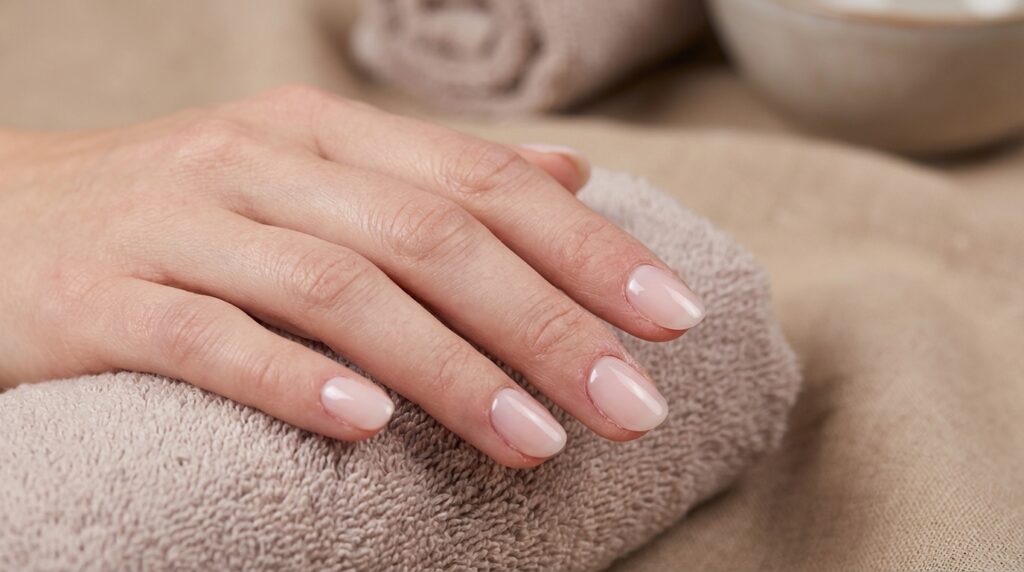
There is a distinct hesitation I see in clients who have experienced the aftermath of aggressive acrylics or improper gel removal. They sit in my chair, hiding their hands, worried that any aesthetic enhancement will further compromise their fragile nail plates. This is where the modern approach to faux nails changes the narrative. The latest innovations in soft-gel extensions and adhesive technologies have made press on nails sensitive friendly, allowing for a polished, high-end finish without the trauma associated with traditional enhancements.
This look is ideally suited for the minimalist who values nail health as much as aesthetics. It is particularly striking on short to medium lengths, offering a clean, “your nails but better” appearance that works seamlessly for office environments or those recovering from nail damage. We choose this route not just for convenience, but to provide a protective barrier that allows natural nails to heal underneath a flawless, glossy exterior.
The Visual Aesthetic: Clean, Airy, and refined
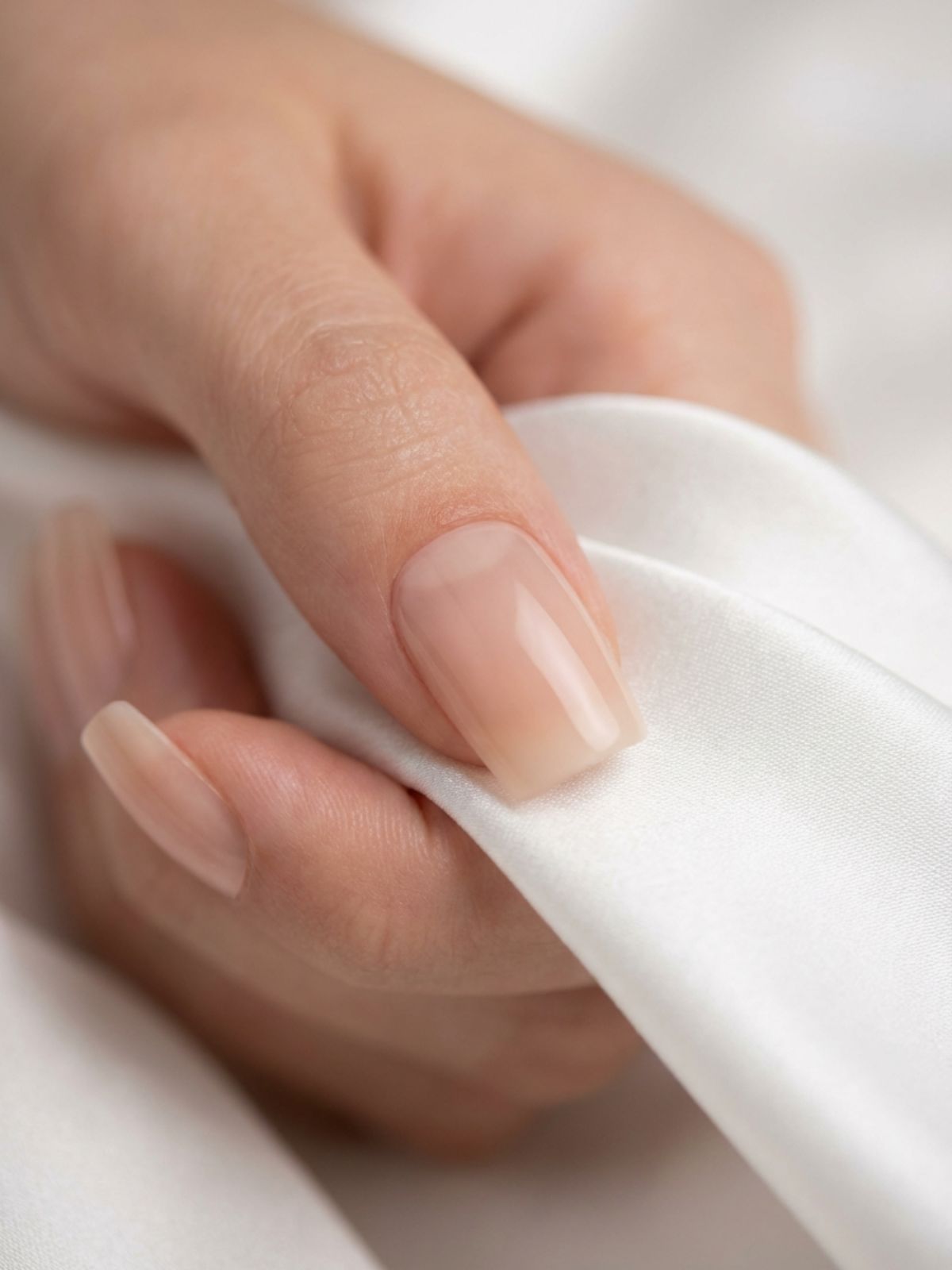
When we discuss press-ons suited for sensitive nails, we are visually moving away from thick, bulky plastic tips and toward wafer-thin, flexible materials that mimic the natural C-curve of the nail. In the salon, we refer to this as a “contact lens” fit—the enhancement should be so thin at the cuticle line that it is virtually undetectable.
Visually, the most successful application of this style relies on semi-sheer and milky opacities. A solid, opaque block of color can sometimes highlight the artificiality of a press-on if the fit isn’t surgical. However, a soft blush, milky white, or translucent nude diffuses light, blurring the line between the natural free edge and the extension. The finish should be hyper-glossy or a soft satin; these textures reflect light in a way that mimics the hydration of a healthy natural nail plate.
The shape is equally critical. For sensitive nail beds, we avoid extreme lengths that create leverage and lift, which can pull painfully on the nail plate. Soft squovals and short almonds are the gold standard here—they elongate the finger without creating a fulcrum point that invites trauma.
Nail Style Profile
| Feature | Description |
|---|---|
| Color Family | Nudes, Milky Whites, Soft Blush, Sheer Tints |
| Opacity | Sheer to Semi-Sheer |
| Finish | High-Gloss, Jelly, or Satin |
| Ideal Nail Length | Short to Medium-Short |
| Ideal Nail Shape | Squoval or Soft Almond |
| Natural Appearance | Very Natural |
| Best For | Recovery periods, minimalist aesthetics, sensitive nail beds |
Why “Press On Nails Sensitive” Solutions Are Replacing Acrylics
The surge in popularity for this gentle approach stems from a collective fatigue with damage. Clients are becoming increasingly educated about the chemistry of nail products. They understand that it is rarely the product itself that causes damage, but the preparation and removal process. The “press on nails sensitive” approach prioritizes preservation.
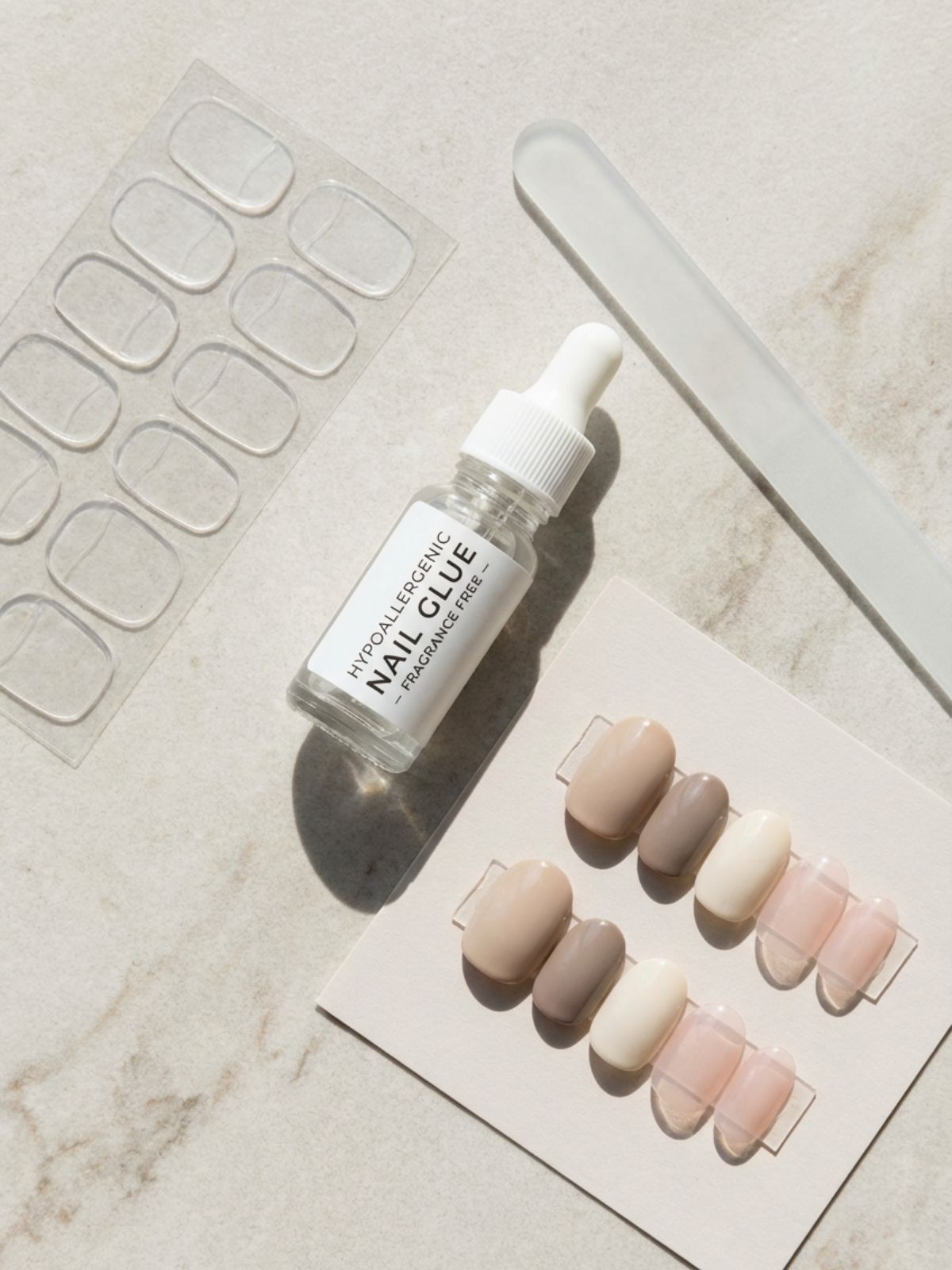
By utilizing double-sided adhesive tabs or hypoallergenic, soak-off resins, we eliminate the need for aggressive etching of the natural nail. This method provides a protective shield. Durability has also improved drastically; modern press-ons have flexibility that absorbs shock rather than cracking, meaning your manicure moves with your hand, not against it. It is the intersection of luxury and rehabilitation.
How to Commission This Look
At a Nail Salon
While press-ons are traditionally a DIY product, high-end salons are beginning to offer “custom fit” services. When booking, ask for Soft Gel Extensions applied with a sensitive-friendly adhesive or a “peel-off base” technique. Bring reference photos that show the cuticle area clearly; you want to demonstrate that you are looking for a flush, seamless transition, not a bulky enhancement.
Be explicit about your sensitivity. Request that the technician avoids the electric file (e-file) on your natural nail plate. A gentle buff with a soft sponge file is all that is required for adhesion. If you have a history of contact dermatitis, ask to see the Material Safety Data Sheet (MSDS) for their adhesive to check for HEMA (hydroxyethyl methacrylate), a common allergen.

At Home
Achieving a salon-quality result at home requires sourcing the right materials. Avoid rigid plastic tips found in drugstores; look for “soft gel” full-cover tips which are flexible and exert less pressure on the nail bed. For the most natural finish, choose tips that are pre-etched on the underside but smooth on top. If you are shopping for a younger client or someone with very delicate nail beds, looking into teen press-ons can often yield smaller sizes and gentler adhesives that prevent overwhelming a smaller nail plate.
Step-by-Step Application for the Most Natural Result
The difference between a “sticker” look and a high-end manicure lies entirely in the preparation. We treat the application of press-ons with the same sterile precision as a medical procedure.
1. The Sterile Prep
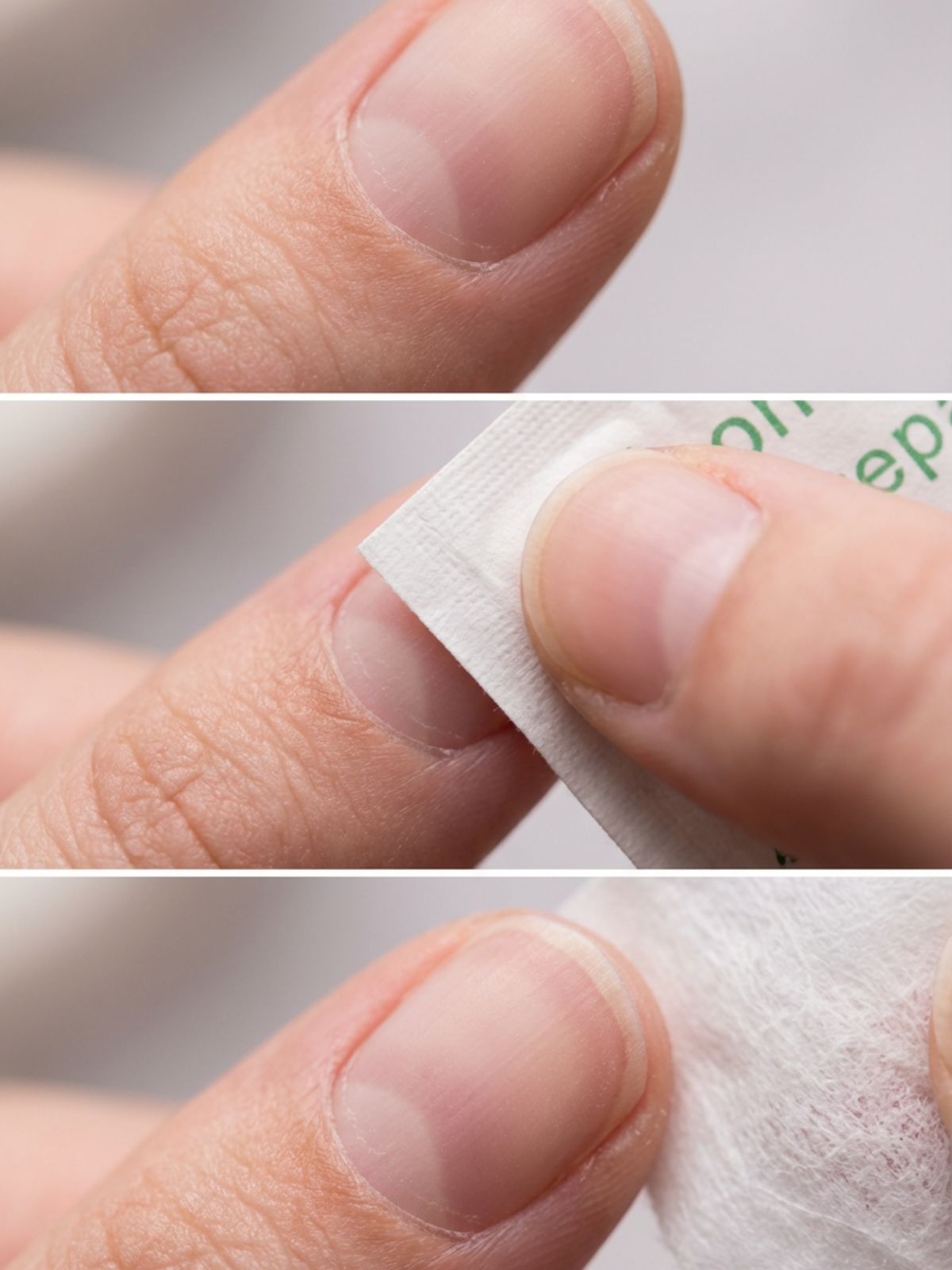
Moisture and oil are the enemies of adhesion, but we must remove them gently. Wash hands thoroughly with a non-moisturizing soap. Instead of roughing up the nail with a grit file, use a buffer block to lightly remove the surface shine. This creates a “velvet” texture for the adhesive to grip without thinning the nail plate.
Pro Tip: After buffing, cleanse the nail plate with 70% isopropyl alcohol or pure acetone. Do not touch your nails to your face or hair after this step. The oils from your skin will instantly compromise the bond.
2. Sizing and Shaping
Measure your press-ons against your natural nail before applying any glue. The press-on should fit sidewall to sidewall comfortably without you having to press it down flat. If you are between sizes, always choose the larger size and gently file the sides down. A tip that is too small will pull at your natural nail as it tries to spring back to its original shape, causing aching and popping off.
3. The Application Architecture
Apply a thin layer of sensitive-formula glue or your adhesive tab to the natural nail, and a small dot to the back of the press-on. Align the press-on at a 45-degree angle near the cuticle—but not touching the skin. Slide it gently down until it meets the cuticle line, then press down firmly, starting from the center and rocking to the sides. This technique pushes air bubbles out, preventing that visible white “air pocket” that makes press-ons look fake.
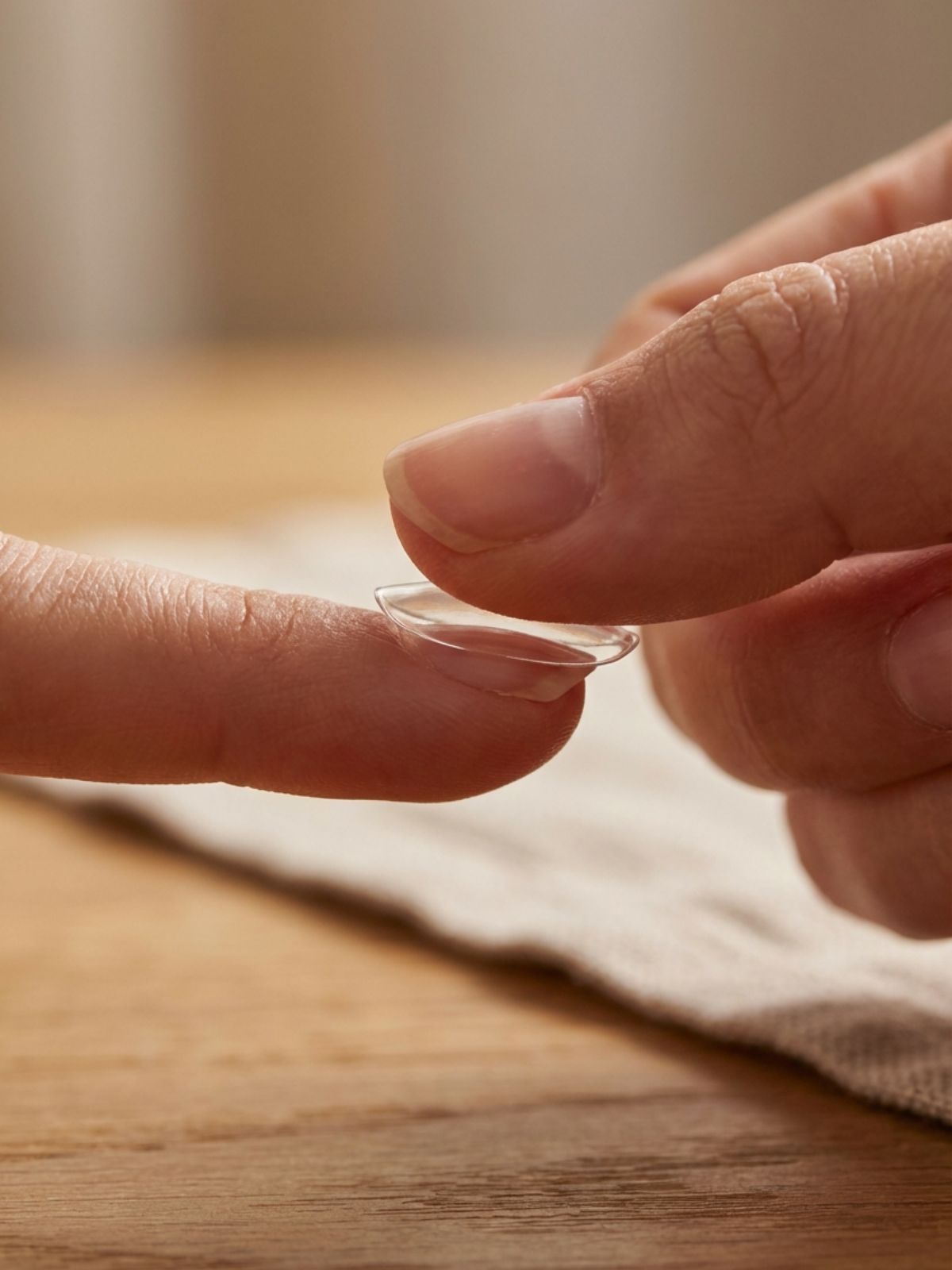
4. The Invisible Finish
Once the glue is dry, standard plastic tips often have a sharp, jagged edge. File the free edge of the press-on to soften the shape. Use a glass file for a smooth, sealed edge. Finally, apply a layer of high-quality cuticle oil to rehydrate the skin surrounding the nail, giving it that fresh-from-the-salon glow.
Common Mistakes That Compromise the Look
The Floating Cuticle
Applying the press-on too far away from the cuticle line creates a gap that immediately signals “fake nails.” Conversely, gluing the nail onto the cuticle skin will cause lifting within hours and can lead to contact dermatitis. The goal is a hairline gap—scarcely visible to the naked eye.
Ignoring the Undertone
Just like foundation, nude nails have undertones. A cool-toned pink on warm, olive skin can look stark and plastic. For a minimal, integrated look, match the press-on color to your nail bed’s natural blush or the lunula (the half-moon at the base).
Bulky Tips
Many generic press-ons are too thick at the base. If you find your tips look like a ridge on your finger, use a file to gently taper the cuticle end of the press-on before you glue it down. This creates a seamless gradient from skin to artificial nail.

Maintenance and Longevity for Sensitive Hands
With proper application, a gentle press-on set using adhesive tabs can last 1–3 days, while resin-based applications can endure for 10–14 days. For sensitive nails, I recommend shorter wear times to allow the nails to breathe and hydrate in between sets.
To maintain the gloss, apply a top coat every 3-4 days. This seals the plastic and prevents the microscopic scratches that dull the surface over time. Keep water exposure to a minimum; prolonged soaking causes the natural nail to expand and the adhesive to loosen. Wear gloves when doing dishes—this is non-negotiable for longevity.
For those interested in maintaining the health of shorter nails underneath, you might find my guide on Minimal Nails for Short Fingers helpful for styling tips that flatter without requiring length.

FAQ: Expert Answers
Q: Will press-on nails damage my already thin nails?
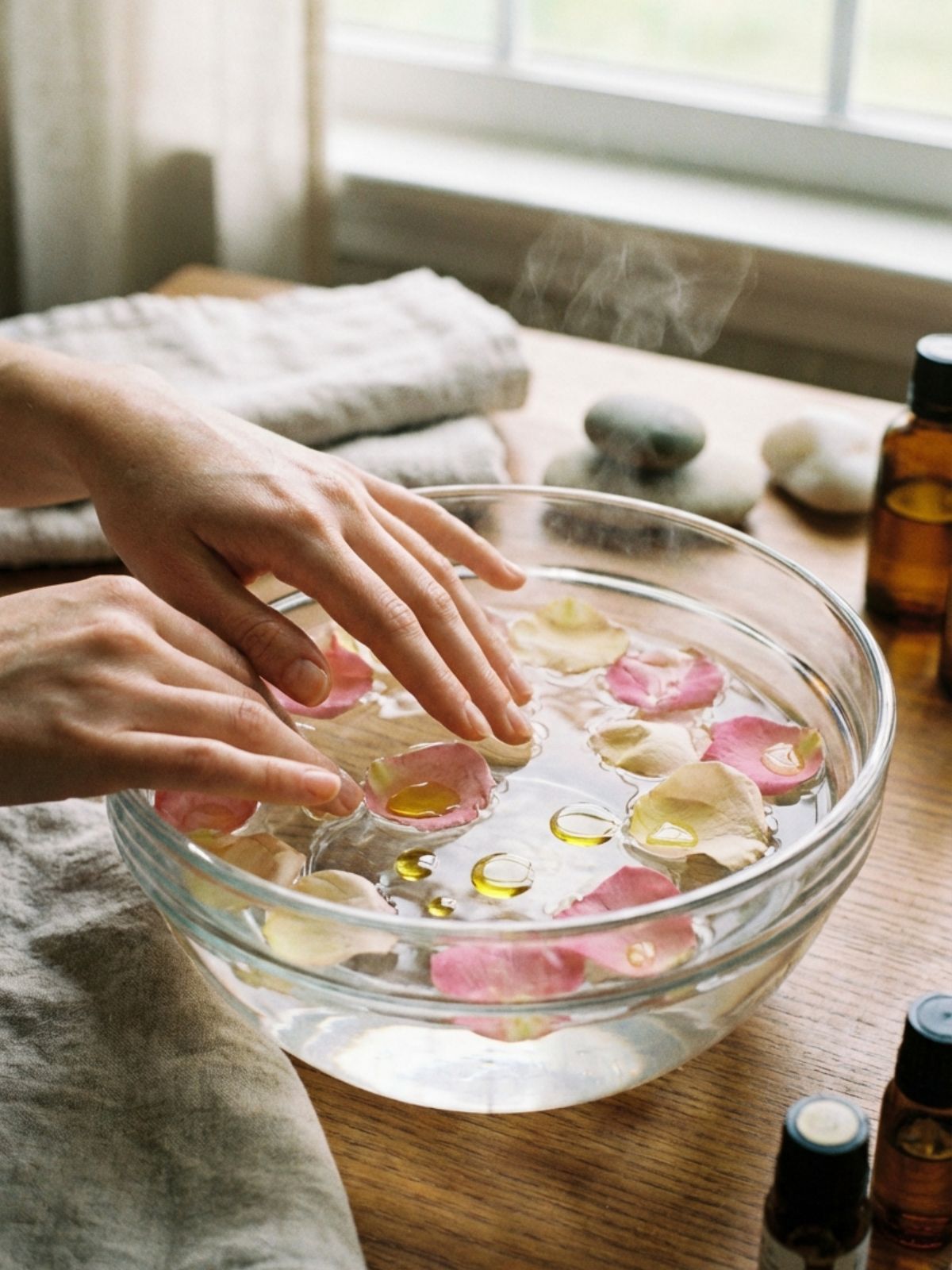
Damage usually occurs during removal. If you rip or pop the nails off, you will take layers of natural nail with them. If you soak them off patiently with warm soapy water and oil (for tabs) or acetone (for glue), your sensitive nails should remain intact.
Q: What is the best adhesive for extreme sensitivity?
Adhesive tabs are the safest option as they contain fewer potential allergens than cyanoacrylate (nail glue). However, for longer wear, look for “5-free” or hypoallergenic nail glues specifically formulated for sensitive eyes and skin.
Q: Can I file press-on nails to change the shape?
Absolutely. In fact, I encourage it. Customizing the shape to mirror your cuticle line and preferred length is what elevates a $15 set to look like a $100 manicure. Just use a fine-grit file to avoid shredding the tip.
Q: Is it better to have cuticles pushed back or cut?
For sensitive hands, never cut the living tissue of the cuticle. Gently push them back after a shower when the skin is soft. Cutting creates open pathways for bacteria and irritation, especially when introducing adhesives. For more on maintaining healthy skin around the nails, Byrdie’s guide to cuticle care offers excellent dermatologist-backed advice.
Conclusion
Embracing press-ons when you have sensitive nails is not about compromising on luxury; it is about smarter beauty. By choosing high-quality materials, prioritizing proper fit, and committing to gentle removal practices, you can enjoy the confidence of a flawless manicure without the anxiety of damage. Your hands are a canvas—treat them with the delicacy they deserve, and the result will always be effortlessly chic.